Evaluating the Gift Shape Window Thin Square Favor Box for DIY Packaging
Selecting the appropriate packaging for homemade treats or small party favors requires balancing aesthetic appeal with structural integrity. The Gift Shape Window Thin Square Favor Box represents a specific niche in paper crafting that bridges the gap between flat envelopes and bulky shipping boxes. Designed by Print Cut Hang, this template offers a distinct profile characterized by its low height, decorative window cutout, and perforated heart motifs. For crafters and event planners comparing packaging options, understanding the specific utility of this thin square format is essential for determining whether it aligns with project requirements or if an alternative vessel would be more suitable.
Defining the Thin Square Profile and Structural Characteristics
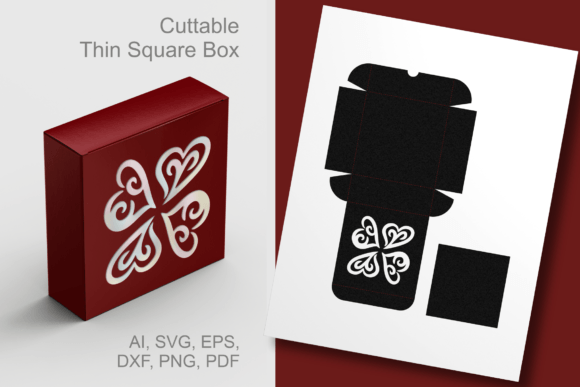
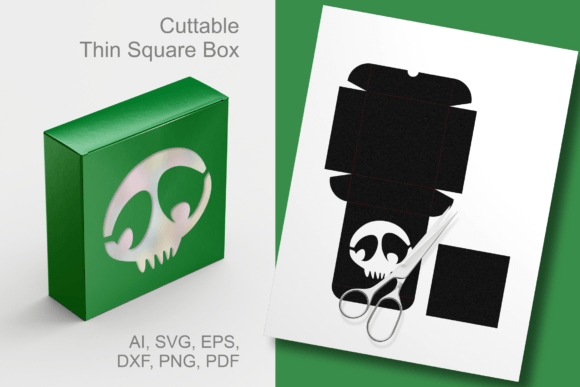
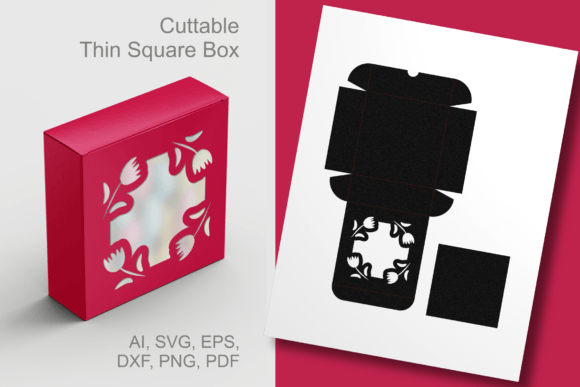
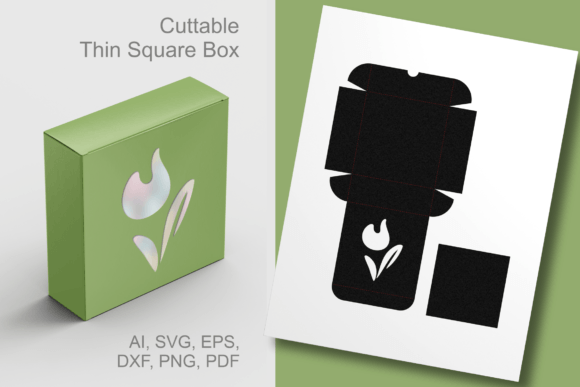
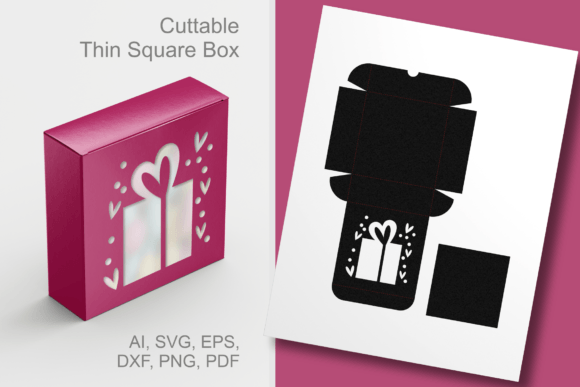
The primary differentiator of this template is its dimensional ratio. Measuring approximately 6 x 6 x 2 inches (15 x 15 x 5 cm) after assembly, the box occupies a "thin square" category. This geometry is fundamentally different from standard cubic favor boxes or tall rectangular sleeves. The 2-inch depth provides enough volume for layered cookies, macarons, truffles, or flat artisanal goods, but it intentionally restricts vertical space. This limitation is a design feature rather than a flaw; it forces a curated presentation where items are displayed horizontally rather than stacked haphazardly.
The inclusion of a gift-shaped window serves a dual purpose. Visually, it breaks up the solid surface area of the cardstock, adding texture and allowing the contents to function as part of the decoration. Structurally, windows can sometimes compromise box rigidity, but the surrounding heart and dot decorative holes are strategically placed to maintain material strength while providing ventilation. This is particularly relevant for food safety and freshness when packaging baked goods. When evaluating this template, users must recognize that the decorative elements are integral to the design's balance, distinguishing it from plain utility boxes that rely solely on external stickers or ribbons for visual interest.
Comparing Digital Formats for Cutting Machine Compatibility
A critical decision factor for DIY packaging is file compatibility and editing flexibility. This template is provided as a comprehensive digital suite including SVG, EPS, AI, DXF, PDF, PNG, and JPG formats. Understanding the tradeoffs between these formats helps users select the right asset for their specific workflow.
- Vector Files (SVG, EPS, AI, DXF): These are the industry standard for electronic cutting machines like Cricut, Silhouette, and Brother ScanNCut. Unlike raster images, vectors allow for infinite resizing without pixelation. If you need to adjust the 6x6 inch base size to accommodate larger pastries or smaller jewelry items, vector files preserve the line weight of the heart cutouts and fold lines. DXF is specifically useful for older Silhouette Basic Edition users who cannot import SVGs without upgrading software.
- Vector-Based PDF: Often overlooked, this format is ideal for users who prefer manual cutting or professional print shops. Because it remains vector-based, it prints at maximum resolution regardless of scale. It serves as a reliable backup if cutting machine software fails to interpret proprietary vector formats correctly.
- Raster Files (PNG, JPG): While included for completeness, these have significant limitations for structural packaging. They lack cut lines and score marks necessary for automated assembly. These formats are best reserved for digital mockups, invitation coordination, or sublimation printing onto pre-made boxes, rather than constructing the box itself.
When comparing this multi-format offering to single-format templates found on free repositories, the advantage lies in versatility. Free resources often provide only JPGs or non-editable PDFs, forcing users to manually trace dimensions—a process prone to measurement errors that result in ill-fitting boxes.
Assessing Fit: When This Template Outperforms Alternatives
The Gift Shape Window Thin Square Favor Box excels in specific scenarios where traditional packaging falls short. Its strengths become apparent when compared against three common alternatives: cellophane bags, standard cube boxes, and envelope-style holders.
Superiority Over Cellophane Bags for Fragile Goods
Cellophane bags are cost-effective and flexible, but they offer zero crush protection. For delicate items like shortbread, meringues, or decorated sugar cookies, bags often lead to breakage during transport or handling. The rigid cardstock structure of this thin square box provides physical shielding. Furthermore, the window eliminates the "mystery bag" effect, allowing recipients to appreciate the craftsmanship before opening. This makes the box a superior choice for wedding favors or corporate gifts where presentation quality reflects directly on the host or brand.
Advantages Over Standard Cube Boxes
Standard 4x4x4 inch cube boxes are ubiquitous but often inefficient for flat treats. Placing cookies in a deep cube requires excessive filler material to prevent shifting, or results in a half-empty appearance that suggests scarcity. The 6x6x2 inch profile matches the natural geometry of most baked goods and confections. This efficient use of space reduces material waste and creates a perception of abundance. Additionally, the lower center of gravity makes thin square boxes less likely to tip over on buffet tables compared to taller cubes.
Differentiation from Envelope Holders
While envelope-style holders are excellent for cash or cards, they lack the depth required for three-dimensional treats. Even puffy envelopes struggle with items thicker than 0.5 inches. The 2-inch sidewall of this template accommodates voluminous items like frosted cupcakes or clustered candies that would bulge or tear an envelope. The box format also allows for stacking during storage and display, whereas envelopes must be laid flat or hung.
Limitations and Decision Factors for Crafters
Despite its advantages, the Gift Shape Window Thin Square Favor Box is not a universal solution. A balanced evaluation requires acknowledging its constraints to avoid project frustration.
Material Thickness Sensitivity: The intricate heart and dot cutouts require precise blade calibration. Cardstock that is too thick (over 80lb/216gsm) may cause tearing around the small decorative holes or result in incomplete cuts that require manual weeding. Conversely, paper lighter than 65lb/176gsm may lack the stiffness needed to support the lid and window frame, causing the box to sag. Users must test their specific material before committing to bulk production.
Assembly Time Investment: Compared to pop-up boxes or pre-glued containers, this template requires scoring, folding, and tab insertion. The decorative elements add complexity to the alignment process. For events requiring hundreds of units, the labor cost per box increases significantly. In high-volume scenarios, simpler designs or commercial pre-assembled boxes may be more pragmatic, reserving this template for boutique batches where handmade detail is valued over speed.
Content Size Restrictions: The fixed 2-inch height is non-negotiable without vector editing skills. Items exceeding this dimension will prevent the lid from closing flush. Users must measure their intended contents precisely, accounting for any internal liners or tissue paper that adds bulk. If your product line varies significantly in height, maintaining multiple resized versions of this template becomes necessary.
Customization and Resizing Considerations
One of the most valuable aspects of this digital template is the ability to resize according to specific needs. However, proportional scaling requires technical awareness. Simply dragging the corner of an SVG file scales everything uniformly, which can distort functional elements. Score lines may become too faint to register, or glue tabs may become disproportionately large relative to the box face.
Experienced users should utilize the offset or contour tools within their design software to adjust dimensions intelligently. For example, widening the box base while maintaining the original tab size ensures secure closure. The universal vector nature of the Print Cut Hang design facilitates this level of customization, unlike raster-based templates where resizing degrades quality. This adaptability extends the template’s lifespan beyond seasonal holidays, making it viable for year-round gifting, product sampling, and specialized retail packaging.
Seasonal Versatility and Practical Application
While frequently associated with Christmas and winter holidays due to the gift-shape motif, the geometric neutrality of the square form allows for broad application. The heart cutouts, while romantic, are subtle enough to function in non-romantic contexts when paired with appropriate colorways. A white box with red hearts reads as Valentine’s Day; the same file cut from kraft paper with gold foil accents transitions seamlessly to autumn harvest festivals or rustic weddings. Green cardstock transforms it into festive holiday packaging.
This versatility maximizes the return on investment for the digital template. Rather than purchasing separate files for each occasion, users can leverage the core structure and modify surface treatments. The window acts as a neutral frame, allowing the seasonal context to be established entirely through the visible contents and paper color choice. For adults managing household budgets or small business inventory, this multi-season utility is a significant practical advantage over single-use novelty packaging.
Making the Final Selection
The Gift Shape Window Thin Square Favor Box is a specialized tool best suited for creators who prioritize presentation precision and structural protection for flat-to-medium volume items. It outperforms bags for fragility and cubes for spatial efficiency. Its comprehensive file support accommodates both hobbyist cutters and professional workflows. However, those requiring high-speed assembly, extreme durability for shipping, or accommodation for tall objects should explore alternative formats. By weighing these factors against specific project parameters, users can confidently determine whether this template serves as the optimal foundation for their packaging needs or if their objectives demand a different structural approach.