3D Valentine's Gnomes Set: Integrating Digital Assets into Creative Workflows
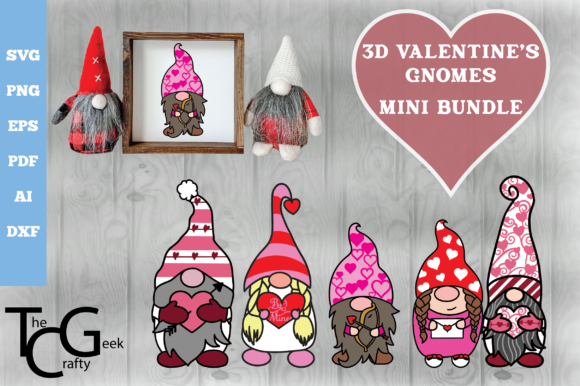
In the landscape of digital crafting and small business product development, asset selection is rarely just about aesthetics; it is fundamentally about workflow efficiency and technical compatibility. The 3D Valentine's Gnomes Set serves as a versatile digital foundation for seasonal projects, bridging the gap between conceptual design and physical production. For creators, educators, and entrepreneurs, this collection is not merely a decorative element but a functional component within a broader manufacturing or creative process. Understanding how to leverage these specific file formats ensures that the transition from digital download to finished product is seamless, reducing friction in both hobbyist and commercial environments.
Technical Specifications and Asset Management
Before initiating any project, proper asset management is critical. This set is delivered as a compressed ZIP file, requiring extraction prior to use. Integrating this step into your initial setup prevents broken links and software errors later in the production phase. Once extracted, you gain access to a comprehensive suite of formats designed to cover the entire spectrum of digital fabrication and print media. The inclusion of multiple vector and raster formats ensures that the 3D Valentine's Gnomes Set remains agnostic to specific hardware ecosystems, allowing for flexibility across different machines and software platforms.
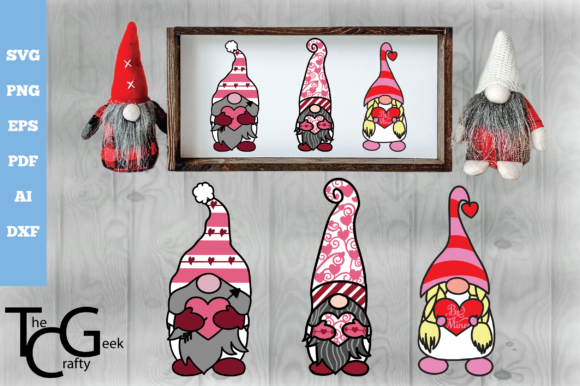
The package includes three distinct designs, each provided in six specialized formats. This redundancy is intentional, supporting various stages of the creation process:
- SVG (Scalable Vector Graphics): The industry standard for electronic cutting machines. These files retain path data essential for precise blade movement in Cricut Design Space and Silhouette Studio.
- EPS (Encapsulated PostScript): Ideal for professional printing and large-format output. EPS files maintain scalability without pixelation, making them suitable for signage or apparel where size varies significantly.
- PNG (Portable Network Graphics): Provided at 300 DPI with transparent backgrounds. These high-resolution raster images are optimized for sublimation, direct-to-garment (DTG) printing, and digital mockups where vector paths are unnecessary.
- PDF (Portable Document Format): Formatted specifically for print-ready outputs. This format locks in dimensions and color profiles, ensuring consistency when sending files to third-party printers or using home laser printers for card stock.
- AI (Adobe Illustrator): The source file format for deep customization. Users can modify anchor points, adjust stroke weights, or combine elements before exporting to other formats.
- DXF (Drawing Exchange Format): Essential for users of Silhouette Studio Basic Edition and certain laser engraving software. DXF provides open vector data compatible with systems that do not natively support SVG imports.
Pre-Production Compatibility and Software Verification
A common bottleneck in digital crafting workflows is software incompatibility. Before purchasing or beginning work with the 3D Valentine's Gnomes Set, verify that your specific cutting machine or design software supports the intended file type. While major platforms like Sure Cuts A Lot, Cricut, and Silhouette are broadly compatible, firmware updates or legacy software versions may handle vector nodes differently. Testing a single file on scrap material is a recommended quality control measure before committing to bulk production. This validation step confirms that line weights translate correctly to cut paths and that registration marks for print-then-cut projects align properly.
For those utilizing laser engravers, the interaction between file format and machine software is equally vital. DXF and SVG files typically offer the best results for vector scoring and cutting, while high-resolution PNGs are preferable for raster engraving. Understanding which format triggers which machine behavior allows for more precise planning and reduces material waste during the calibration phase.
Application Across Physical Media and Production Methods
The versatility of this digital set lies in its adaptability to various production methods. In a practical workflow, the same core design can be repurposed across multiple revenue streams or project types without requiring redrawing or tracing. This efficiency is particularly valuable for small business owners managing inventory for seasonal markets or educators preparing classroom activities.
Apparel and Textile Customization
When creating shirts, pillows, or tote bags, the choice of application method dictates the file format. For heat transfer vinyl (HTV), the SVG file is used to generate cut lines. However, for sublimation or DTG printing, the 300 DPI PNG is superior because it preserves the shading and depth characteristic of the "3D" aesthetic without the jagged edges sometimes associated with vectorized gradients. Planning the production run by grouping items based on application method—cutting all HTV designs first, then switching to sublimation presses—streamlines labor and equipment setup.
Paper Crafts and Print-Then-Cut Projects
For greeting cards, stickers, and tags, the print-then-cut functionality in modern cutting software relies heavily on accurate registration. The included PNG files provide the necessary visual density for optical sensors to detect cut boundaries. Simultaneously, the PDF files serve as a reliable backup for traditional printing on pre-scored cardstock. By utilizing the vector-based AI or EPS files, designers can also create custom packaging or branded labels that match the gnomes' style, ensuring visual consistency across an entire product line.
Laser Engraving and Dimensional Art
The "3D" aspect of these gnomes translates exceptionally well to layered wood crafts and laser engraving. Using the DXF or SVG files, makers can separate individual color layers to create dimensional shadow boxes or cake toppers. This requires a deconstruction workflow where the digital asset is broken down into constituent parts rather than treated as a single image. Proper layer organization in the design software before sending to the laser cutter is essential for achieving the intended depth and assembly logic.
Workflow Integration and Long-Term Asset Utility
Integrating the 3D Valentine's Gnomes Set into a routine involves more than just immediate usage; it requires thoughtful organization for future accessibility. Digital assets should be cataloged with clear naming conventions and metadata. Renaming generic filenames to include descriptors like "Valentine-Gnome-3D-SVG-v1" aids in rapid retrieval during busy production seasons. Storing these files in cloud-synced folders ensures access across multiple workstations, facilitating collaboration if team members share design responsibilities.
From a business perspective, understanding the licensing and usage rights associated with digital downloads is part of operational compliance. While these files enable the creation of physical works of art for sale, they remain digital intellectual property. Maintaining records of purchase and adhering to license terms protects the integrity of your business operations. Furthermore, keeping the original ZIP file archived serves as a master backup. If working files become corrupted or accidentally modified beyond repair, having the pristine source ensures continuity without needing to repurchase.
Quality Control and Practical Execution Tips
Achieving professional results requires attention to detail during the execution phase. When working with the 300 DPI PNGs for printing, always verify color profiles. Screen displays use RGB, while most printers utilize CMYK. Converting files appropriately before printing prevents unexpected color shifts, especially in the reds and pinks typical of Valentine’s themes. For cutting projects, perform test cuts on the actual material intended for the final product. Cardstock density, vinyl tackiness, and fabric weave all affect blade depth and pressure settings. Relying on default settings often leads to incomplete cuts or torn materials.
Efficiency also comes from batching similar tasks. If producing a range of gnome-themed items, prepare all SVG cut files in one session, all sublimation prints in another, and all assembly tasks in a third. This reduces cognitive load and equipment changeover time. Additionally, keep a log of successful settings for specific materials paired with these designs. Over time, this builds a proprietary knowledge base that accelerates future production cycles involving similar assets.
Understanding the Nature of Digital Deliverables
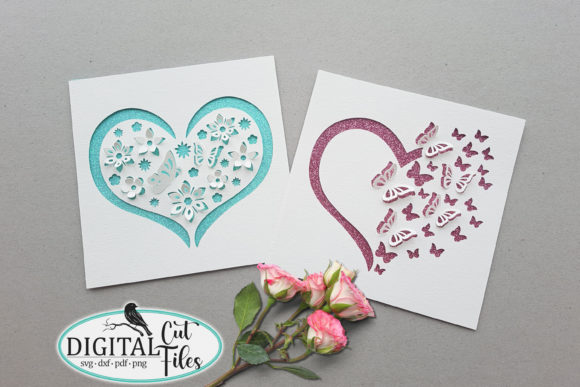
It is imperative to recognize that this product is a digital download only. No physical items will be shipped. All visuals associated with the listing, including backgrounds, logos, mock-ups, and photographed examples, are strictly illustrative. They demonstrate potential applications but are not included in the file package. This distinction is crucial for inventory planning and customer expectation management. Sellers using these designs must photograph their own finished products for listings to avoid copyright issues and to accurately represent the quality of their specific craftsmanship.
Ultimately, the value of the 3D Valentine's Gnomes Set is realized through active implementation. Whether used for personal expression, educational engagement, or commercial enterprise, success depends on treating the digital files as industrial components within a structured workflow. By respecting technical specifications, verifying compatibility, and organizing assets strategically, users can transform a simple download into a scalable, repeatable, and high-quality production resource. The intersection of creative vision and technical discipline is where digital assets truly deliver their promised utility.