Love Mail Window Rectangular Favor Box: A Practical Digital Template for Custom Packaging
In the landscape of DIY packaging and small-scale product presentation, finding a balance between structural integrity and aesthetic appeal is often a challenge. The Love Mail Window Rectangular Favor Box addresses this specific niche by combining functional geometry with thematic design elements. This digital asset is not merely a decorative template; it is a technical resource designed for users who require precise, cuttable files for creating custom favor boxes. Whether utilized for Valentine’s Day events, wedding favors, or boutique retail packaging, this template offers a standardized solution for producing professional-grade paper goods without the overhead of custom die-cutting services.
Design Architecture and Visual Functionality
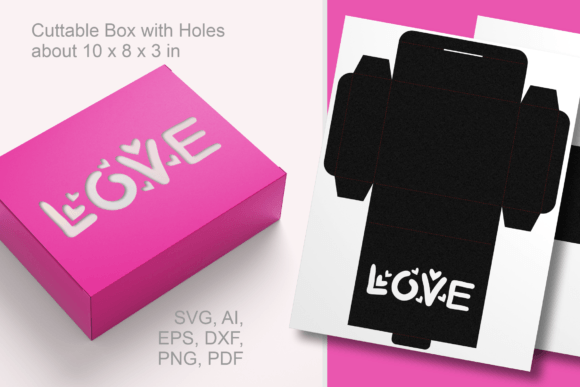
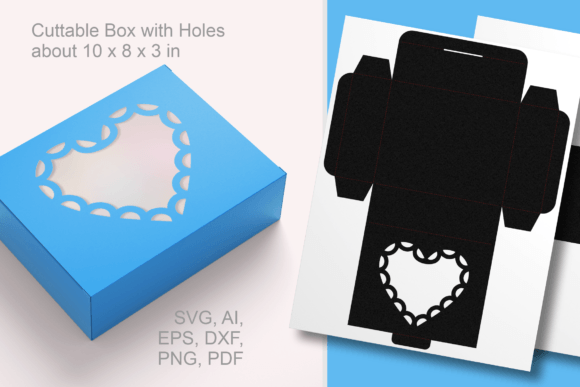
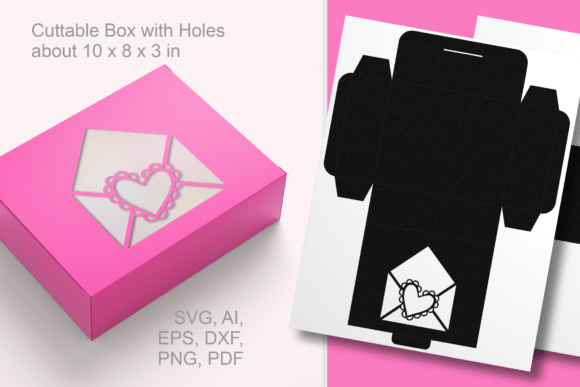
The primary value proposition of this rectangular favor box lies in its specific window configuration. Unlike standard solid boxes that conceal contents, or generic window boxes that lack thematic cohesion, this design integrates a heart-shaped aperture framed to resemble an envelope. This "Love Mail" motif serves a dual purpose: it acts as a visual hook relevant to romantic or affectionate occasions, and it functions as a practical display mechanism for the contents within.
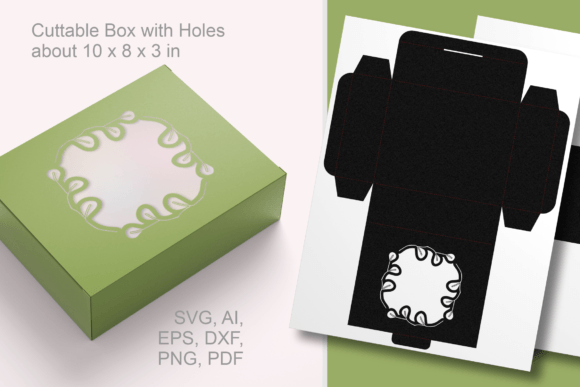
From a production standpoint, the inclusion of tiny decorative holes surrounding the heart window is a significant detail. In paper engineering, these perforations are not purely ornamental; they serve to reduce tension around the central cutout, potentially minimizing tearing during the weeding and folding process. For creators packaging chocolates, small cookies, or candy, this window provides immediate visual verification of the product, which is essential for both food safety perception and aesthetic presentation. The dimensions—approximately 10 x 8 x 3 inches (25 x 20 x 7.5 cm) before assembly—offer substantial volume for generous favors while maintaining a manageable footprint for table settings or shipping.
Technical Specifications and File Compatibility
For professionals and serious hobbyists, the utility of a digital template is defined by its file ecosystem. This Love Mail Window Rectangular Favor Box is distributed as a comprehensive vector package, ensuring compatibility across various hardware and software platforms. Understanding the specific application of each file type is crucial for workflow efficiency:
- SVG, EPS, AI, and DXF Files: These universal vector formats are the industry standard for cutting machines such as Cricut, Silhouette, and Brother ScanNCut. Because they are mathematically defined paths rather than pixel-based images, they allow for infinite resizing without loss of fidelity. This is critical when adapting the box from a large favor size down to a miniature tag size.
- Vector-Based PDF: Unlike rasterized PDFs, this file retains editable path data. It is ideal for users who prefer designing in Adobe Illustrator or Affinity Designer before sending to a cutter, or for those utilizing print-and-cut workflows where registration marks must align perfectly with cut lines.
- Transparent PNG and JPEG: While less suitable for precision cutting, these raster files serve important auxiliary roles. They are useful for creating digital mockups, listing photos for e-commerce, or printing on home printers that do not support vector inputs.
The provision of multiple formats eliminates the need for third-party conversion tools, which often introduce node errors or open paths that cause cutting failures. Having native access to clean vector lines ensures that the scoring lines and cut lines remain distinct, a non-negotiable requirement for successful box assembly.
Material Selection and Production Considerations
While the digital template provides the geometry, the physical success of the Love Mail Window Rectangular Favor Box depends heavily on substrate selection. The design features intricate cuts around the heart window and structural folds for the rectangular body. Consequently, material weight and grain direction are variables that must be managed carefully.
For optimal results, cardstock ranging from 65lb to 80lb (176gsm to 216gsm) is generally recommended. Lighter weights may result in a box that lacks rigidity, causing the heart window to warp or the envelope flap to droop. Conversely, cardstock exceeding 100lb may be too thick for the delicate decorative holes, leading to ragged edges or blade drag. Users working with textured papers should perform test cuts, as surface irregularities can interfere with the precision required for the interlocking tabs.
Furthermore, because this is a resizable template, users must adjust blade depth and pressure proportionally when scaling the design. A common error in DIY packaging is resizing the vector but retaining the original machine settings, resulting in incomplete cuts on smaller versions or tear-outs on larger ones. The template’s versatility demands that the operator understands the relationship between digital scale and physical material properties.
Use Cases and Audience Fit
This template is engineered for a diverse range of applications, extending well beyond its obvious Valentine’s Day association. Its rectangular geometry makes it inherently more space-efficient than curved or irregular shapes, which is a logistical advantage for storage and transport.
Event Planning and Weddings
For wedding planners and DIY brides, consistency is key. This template allows for the batch production of uniform favor boxes. The "Love Mail" theme aligns seamlessly with romantic celebrations, but the clean rectangular lines prevent it from appearing overly juvenile. It bridges the gap between playful and elegant, making it suitable for bridal showers, anniversaries, and engagement parties.
Small Business and Retail
Entrepreneurs selling confections, jewelry, or small artisanal goods can utilize this box as branded packaging. The flat surfaces of the rectangular body offer ample space for custom stamps, stickers, or direct printing. Because the template is fully resizable, a business could create a cohesive packaging line where the same design language scales from a large gift box to a small product sampler, reinforcing brand identity through structural consistency.
Educational and Community Projects
Educators and community organizers often require cost-effective, engaging activities. This paper-cut template serves as an excellent resource for teaching geometry, spatial reasoning, and fine motor skills. The assembly process involves logical sequencing and precision, making it a practical hands-on learning tool disguised as a craft project.
Evaluating Long-Term Value and Limitations
When assessing whether to integrate the Love Mail Window Rectangular Favor Box into your resource library, it is important to weigh its strengths against potential limitations. On the positive side, the "all-purpose" nature of the rectangular form factor ensures high ROI. Unlike novelty shapes that may only be usable once a year, this box remains relevant for birthdays, holidays, and everyday gifting. The ability to resize the template further extends its lifespan, allowing a single purchase to cover multiple project requirements.
However, users should be aware of the learning curve associated with intricate window designs. Beginners unfamiliar with their cutting machine’s capabilities may find the decorative holes challenging to weed cleanly. Additionally, while the design is versatile, the specific heart-envelope motif does limit its appropriateness for strictly corporate or somber contexts. Professionals serving B2B clients may need to modify the window shape using vector editing software to make the template suitable for non-romantic branding.
Ultimately, this template represents a solid intersection of form and function. It provides the technical precision required for automated fabrication while delivering the emotional resonance necessary for gift-giving. For makers, marketers, and event professionals who value self-sufficiency and customization, the Love Mail Window Rectangular Favor Box is a reliable asset that streamlines the transition from digital concept to tangible product. By understanding the material requirements and leveraging the included vector files effectively, users can produce packaging that rivals commercial standards in both quality and presentation.