Simple Trefoil Windows Cube Box Template: A Practical Packaging Resource
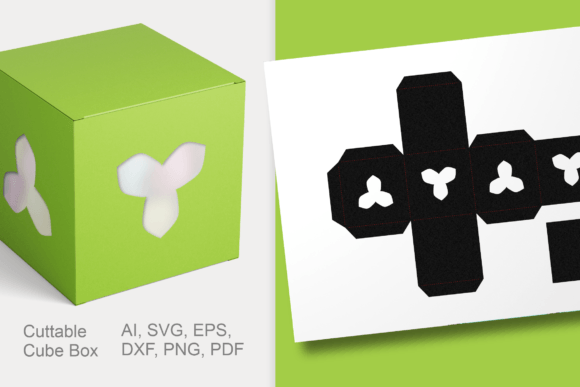
In the competitive landscape of small business packaging and personalized gifting, the presentation is often as critical as the product itself. The Simple Trefoil Windows Cube Box Template addresses a specific need for creators who require professional-grade packaging without the overhead of custom industrial manufacturing. Designed by Print Cut Hang, this digital asset provides a structured solution for producing 4.33 x 4.33 x 4.33 inch (11 x 11 x 11 cm) favor boxes featuring an elegant trefoil window cutout. Unlike generic box templates that prioritize speed over aesthetics, this design balances structural integrity with visual appeal, making it particularly relevant for entrepreneurs, event planners, and serious hobbyists utilizing laser cutting technology or precision craft cutters.
The primary value proposition of this template lies in its versatility and file compatibility. It is not merely a printable PDF but a comprehensive vector package including SVG, EPS, AI, DXF, and transparent PNG formats. This ensures interoperability across various platforms, from Adobe Illustrator for manual editing to LightBurn or Cricut Design Space for automated fabrication. For professionals evaluating packaging assets, the inclusion of universal vector files signals that the designer understands modern production workflows where scalability and editability are non-negotiable requirements.
Design Characteristics and Structural Integrity
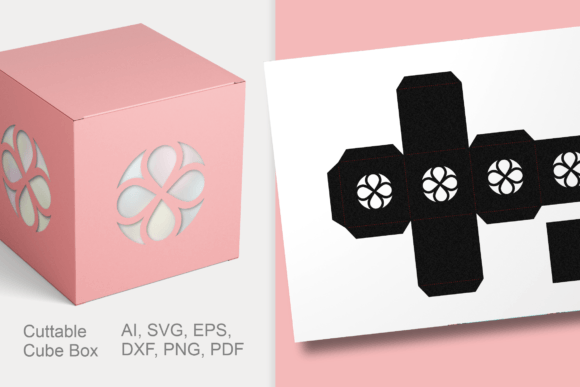
The cube form factor is a staple in packaging due to its space efficiency and ease of stacking, yet standard cube boxes can appear utilitarian. The addition of the simple trefoil window transforms the box from a mere container into a display vessel. The trefoil shape, consisting of three overlapping circles, offers a softer, more organic alternative to square or rectangular windows, creating a frame that naturally draws the eye to the contents. This is strategically important for sellers of confections, jewelry, or artisanal goods where visual verification of quality drives purchasing decisions.
At 11cm per side, the dimensions are optimized for substantial favors rather than trinkets. This size accommodates multiple macarons, a cluster of truffles, small soap bars, or rolled textiles without excessive movement inside the box. From a construction standpoint, the template accounts for material thickness through tab placement and fold lines. Users working with cardstock ranging from 250gsm to 350gsm will find the tolerances generally accurate, though those using heavier chipboard may need to adjust score lines slightly to prevent cracking at the corners. The design prioritizes clean assembly, minimizing visible glue tabs on the exterior faces to maintain a premium finish.
Technical Specifications and Workflow Integration
For makers integrating this Simple Trefoil Windows Cube Box Template into a production line, technical precision is paramount. The availability of separate files for the box structure and the transparent insert demonstrates a thoughtful approach to real-world assembly. The insert template, which must be cut four times per box, allows for the use of acetate, parchment paper, or thin plastic sheets. This component serves a dual purpose: it protects the contents from dust and handling while providing a backdrop that enhances visibility through the trefoil aperture.
- Vector Formats (SVG, EPS, AI, DXF): Essential for laser cutter users requiring precise kerf compensation and for designers needing to resize the box without pixelation. These files typically feature separated layers for cuts and scores.
- PDF Format: Vector-based rather than rasterized, allowing for high-resolution printing directly onto cardstock before cutting. This supports hybrid workflows involving home printers and electronic cutting machines.
- PNG Files: Transparent background images useful for digital mockups, Etsy listings, or social media previews before committing physical materials to production.
- Insert Templates: Dedicated geometry for lining materials, ensuring the window remains functional and hygienic.
The ability to resize the template is a significant advantage for businesses with varying product lines. Because the source files are true vectors, scaling the box down to 8cm or up to 15cm maintains the proportional harmony of the trefoil window. However, users should note that resizing requires adjusting tab lengths manually; simply scaling the entire artboard uniformly can result in tabs that are too large for smaller boxes or too fragile for larger ones. This level of customization makes the template a long-term asset rather than a single-use project file.
Practical Applications and Audience Fit
This template is best suited for users who have moved beyond basic crafting and are operating with some degree of commercial or semi-professional intent. Wedding planners and stationers will find the trefoil motif aligns well with classic and romantic aesthetics, particularly when paired with textured linen cardstocks or pearlescent papers. For cottage food businesses, the windowed design complies with the consumer desire to see products while maintaining a sealed, gift-ready appearance. Educators and workshop leaders may also utilize the template for teaching packaging design fundamentals, as the cube-with-insert construction covers essential concepts in structural engineering and material selection.
Freelancers and marketers creating branded merchandise can leverage the template’s clean lines for post-production customization. The solid panels surrounding the trefoil window offer ample surface area for stamping, foil pressing, or vinyl application. Because the design is minimalist, it acts as a neutral canvas that adapts to diverse brand identities without competing with logos or typography. This adaptability reduces the need to purchase multiple distinct box templates for different clients or seasons.
Evaluating Usability and Production Considerations
While the Simple Trefoil Windows Cube Box Template is robust, successful implementation depends on user preparation. The requirement to cut the insert four times per box introduces a multiplier effect on production time and material usage. Professionals running high-volume batches should calculate waste and machine time accordingly. Laser cutter users should perform test cuts on scrap material to dial in power and speed settings specifically for the trefoil curves; intricate interior cuts often require different parameters than exterior perimeter cuts to avoid scorch marks on the visible edges.
Material choice significantly influences the final outcome. While the template works with standard cardstock, the structural rigidity of a cube relies heavily on paper weight. Papers below 200gsm may result in a box that feels flimsy and lacks the crisp definition necessary for the trefoil window to hold its shape. Conversely, materials exceeding 400gsm may be difficult to fold cleanly along the score lines without specialized equipment. For the window inserts, rigid acetate provides the most professional look but can be challenging to glue; double-sided tape or specialized plastic adhesives are often superior to liquid glues which can cause clouding or warping.
Users should also consider the storage implications of flat-packed versus pre-assembled inventory. This template is designed to be stored flat and assembled on demand, which is ideal for space-constrained studios. However, the assembly process involves adhering four separate insert pieces, which adds a step compared to integrated-window designs. This trade-off between modularity and assembly speed is worth considering for those with strict fulfillment deadlines. For small batches and bespoke orders, the modular insert offers greater flexibility in material mixing (e.g., using colored parchment for one batch and clear acetate for another). For mass production exceeding hundreds of units, the labor cost of inserting four separate pieces may outweigh the benefits unless automated assembly aids are employed.
Long-Term Value and Customization Potential
Beyond immediate utility, this template represents a foundational asset for packaging development. Experienced makers often use such templates as starting points for derivative designs. The vector geometry can be modified to change the trefoil proportion, add ventilation holes for food safety, or integrate interlocking closures to eliminate adhesive entirely. Owning the source files grants the freedom to iterate without recurring licensing fees associated with subscription-based design libraries.
From an SEO and digital marketing perspective for sellers, using a distinctive, well-executed box template contributes to better product photography and unboxing experiences. The trefoil window creates natural negative space in photos, allowing for creative styling that stands out in search results and social feeds. In an era where "unboxing" is a content category, investing in a template that photographs well yields returns beyond the physical protection of the goods.
Ultimately, the Simple Trefoil Windows Cube Box Template by Print Cut Hang serves a niche but vital function. It bridges the gap between amateur craft projects and industrial packaging solutions, offering professional-grade geometry in an accessible digital format. Its strengths lie in its multi-format delivery, scalable vector construction, and aesthetic balance. While it demands careful material selection and accepts a higher assembly complexity due to the four-part insert system, these factors are reasonable trade-offs for the level of customization and finish quality achievable. For the target demographic of creators, small business owners, and event professionals, it provides a reliable, editable foundation for elevating product presentation through thoughtful, functional design.