Green Festive Star Window Pillow Box: Evaluating the Digital Template for Holiday Packaging
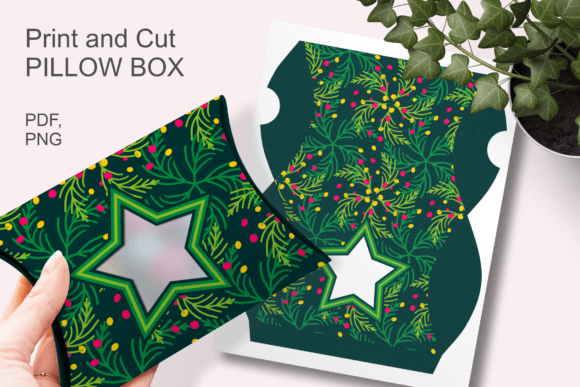
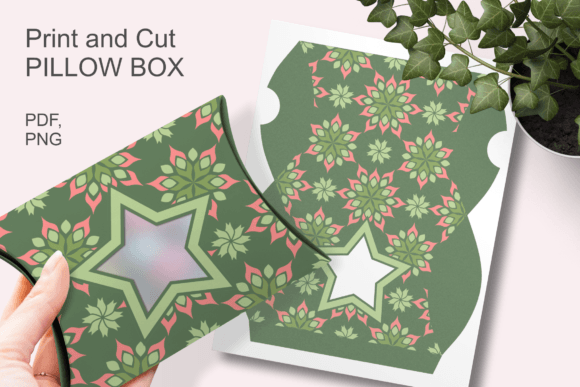
The Green Festive Star Window Pillow Box represents a specific intersection in DIY holiday packaging: a digital-first asset designed for hybrid production using both printers and cutting machines. Unlike traditional pre-manufactured boxes or generic printable templates, this resource is engineered specifically for users who own electronic cutting systems but want to retain the flexibility of home printing. The design features a distinct star-shaped aperture that serves as a viewing window, set against a green festive pattern optimized for inkjet or laser printing. When evaluating packaging options for seasonal events, understanding the technical specifications and practical applications of this digital template helps determine if it aligns with your production capabilities and aesthetic goals.
Digital Assets vs. Pre-Made Alternatives
When sourcing packaging for candies and small gifts, crafters typically choose between three categories: bulk pre-made boxes, print-only PDF templates, and vector-based cut files. The Green Festive Star Window Pillow Box occupies the third category, which offers distinct advantages and tradeoffs compared to the others.
Pre-made pillow boxes are convenient and structurally consistent, but they lack customization. You cannot alter the pattern, adjust the size for odd-shaped items, or match the color scheme to a specific event theme without purchasing entirely new stock. Conversely, standard print-and-fold PDF templates require manual cutting with scissors or an X-Acto knife. While inexpensive, manual cutting often results in frayed edges around intricate shapes like stars, leading to a less professional finish.
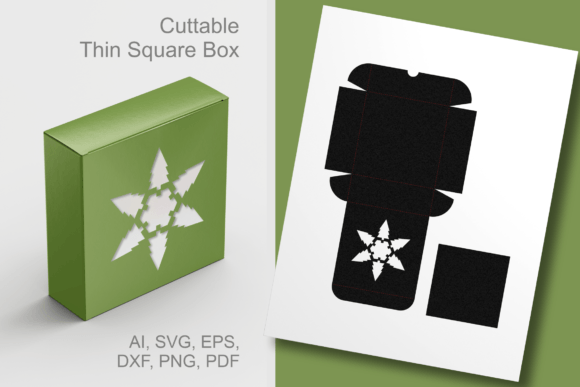
This digital template bridges that gap by providing high-resolution raster files for vibrant printing alongside precise vector paths for machine cutting. The inclusion of SVG, EPS, AI, and DXF formats ensures compatibility with major platforms like Cricut Design Space and Silhouette Studio. For users who have already invested in cutting hardware, this approach maximizes the return on that equipment while offering a level of precision that manual methods cannot achieve. However, it does require more setup time than simply unfolding a pre-glued box. The decision ultimately rests on whether you prioritize speed (pre-made) or customization and finish quality (digital cut file).
Technical Specifications and File Versatility
A critical factor in selecting digital packaging templates is file integrity and resolution. Low-quality downloads often result in pixelated prints or jagged cut lines. This template addresses these issues through a multi-format delivery system:
- Raster Files (PNG/PDF): Provided at 300 DPI with transparent backgrounds, ensuring crisp printing quality. The transparency allows for layering over different colored cardstocks if desired, though the green festive pattern is intended to be printed directly.
- Vector Files (SVG/EPS/AI/DXF): These contain mathematical paths rather than pixels, allowing the cutting machine to follow exact lines regardless of scaling. This is essential for resizing the box without losing edge definition.
- Transparent Insert Template: A dedicated file for creating the window cover using acetate, parchment, or plastic. This component is frequently overlooked in generic templates but is necessary for food safety and structural integrity.
The base dimensions of approximately 4.6 x 6.4 inches (12 x 16 cm) place this box in the medium-gift category. It is substantial enough for cookie assortments, jewelry, or bath bombs, yet compact enough to remain cost-effective regarding paper usage. Because the files are vector-based, users can scale the design down for favor-sized trinkets or up for larger gift sets, provided their cutting mat accommodates the new size.
Practical Applications and Material Considerations
The utility of the Green Festive Star Window Pillow Box extends beyond simple aesthetics; the design influences material selection and assembly workflow. The star window creates a focal point that showcases contents, making it ideal for visually appealing treats like decorated cookies, colorful macarons, or artisanal soaps. However, the presence of a window introduces structural variables that solid boxes do not face.
Paper weight is the most significant variable. Standard copy paper (20 lb/75 gsm) is generally too flimsy for a windowed pillow box, as the removal of material for the star shape weakens the central panel. For optimal rigidity, cardstock between 65 lb and 80 lb (176–216 gsm) is recommended. This weight supports the adhesive tabs and maintains the curved pillow shape without collapsing. Heavier weights may cause scoring issues or prevent the box from closing flushly, particularly around the curved ends.
For food items, the included insert template becomes mandatory. Direct contact between printed cardstock and consumables is rarely food-safe due to ink and paper coatings. Using the provided guide to cut acetate or glassine inserts creates a necessary barrier. Parchment paper offers a rustic, semi-transparent alternative to clear plastic, diffusing the view of the contents slightly while maintaining a cohesive natural aesthetic that complements the green festive pattern.
Evaluating Production Efficiency
While digital templates offer superior customization, they demand a higher labor investment per unit. Understanding this efficiency curve is vital for planning large-scale projects like wedding favors or corporate holiday parties.
For small batches (10–20 units), the Green Festive Star Window Pillow Box is highly efficient. The ability to print multiple layouts on a single sheet of cardstock and batch-cut them reduces waste and setup time. The visual impact of the custom star window justifies the extra effort for personalized gifting.
For large-scale production (100+ units), the calculus shifts. Printing, drying, weeding excess paper from star windows, inserting transparencies, folding, and gluing each box individually can become a bottleneck. In scenarios requiring hundreds of identical units, commercially manufactured window boxes might offer better economies of scale. However, if the specific green pattern and star shape are non-negotiable brand elements, the digital template remains the only viable option, provided adequate production time is allocated.
Design Integration and Seasonal Adaptability
The "green festive" designation suggests a specific color palette, but the template’s structure allows for broader application. The star window is geometrically neutral, meaning it adapts well to various winter holidays beyond Christmas. When paired with gold or silver ribbon, it suits New Year’s celebrations; with red accents, it fits Valentine’s Day; with natural twine, it works for autumn harvest themes.
Compared to die-cut boxes with fixed patterns, this digital asset allows for post-processing customization. Users can add stamped logos, handwritten names, or heat-transfer vinyl details before assembly. This adaptability makes it a stronger choice for small businesses seeking branded packaging without the minimum order quantities associated with custom printing services. The tradeoff is consistency; hand-applied additions will vary slightly between units, whereas factory-printed boxes remain uniform.
Making the Final Selection
Choosing the Green Festive Star Window Pillow Box template depends on matching resources to requirements. It is the correct choice when:
- You possess an electronic cutting machine and wish to utilize it for packaging.
- Standard retail boxes do not match your specific color scheme or size needs.
- You require a food-safe window solution with included templates.
- The project volume is manageable for individual assembly.
- You value the ability to resize the container for different gift types.
Alternative solutions should be considered when:
- Time constraints prohibit individual printing, cutting, and assembly.
- You lack access to a cutting machine and are unwilling to hand-cut intricate star shapes.
- Food safety certification for commercial resale is required (home-printed packaging rarely meets commercial food contact regulations).
- Budget restrictions make premium cardstock and acetate inserts cost-prohibitive compared to bulk wholesale options.
Ultimately, this digital product by Print Cut Hang serves a niche audience of makers who view packaging as an extension of the gift itself. By providing both raster and vector assets in industry-standard formats, it removes technical barriers to entry while maintaining professional output standards. Success relies less on the file itself and more on the user’s ability to select appropriate materials and manage the assembly workflow effectively. For those willing to invest the labor, the result is a bespoke packaging solution that mass-market alternatives cannot replicate.